
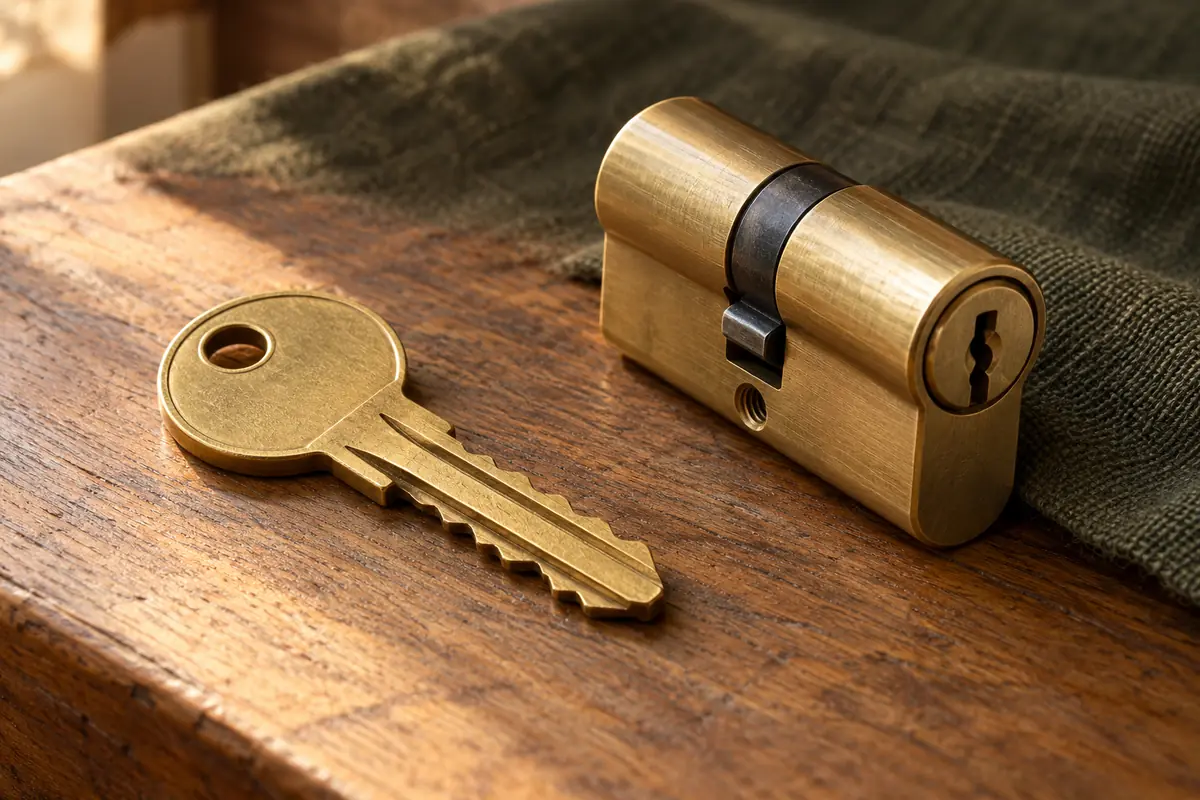
Three things to describe
Tell us what the key does, what the handle does and whether the door closes normally. A key that will not enter is different from one that turns without releasing the latch. A handle that moves loosely adds another useful observation.
Keep those observations separate. Do not dismantle the lock or force a reluctant key to get a more detailed answer. For an immediate lockout, the emergency request page puts safety and location first.
When the frame is part of the picture
If the door catches or needs lifting to lock, say so. The interaction between the door, latch and frame can matter. A problem at one entrance does not prove that every lock on the property needs the same work.
If your actual concern is who still holds a working key, that is a rekeying question. It may sit alongside a repair request, but one should not be used as shorthand for the other.
A useful note for the call
Write down the affected entrance, the symptom and when it began. Add anything visibly loose or damaged and whether another safe entrance is available. For a rented property, identify the person who can approve work.
On the call, ask what can be assessed and how the proposed task will be agreed. The FAQ covers the practical questions around access, authority and availability. Everyday words are enough; the aim is a clear description rather than a part number.